









A highly flavored, late-season dessert apple, perfect for organic production.
Sweet Coppin Apple on G.210 (Spring 2027)
A traditional cider variety from Devon, England.
The tree is moderately vigorous, spreading, precocious, and productive. Somewhat susceptible to fireblight and powdery mildew, this tree will also need to be thinned to maintain annual bearing.
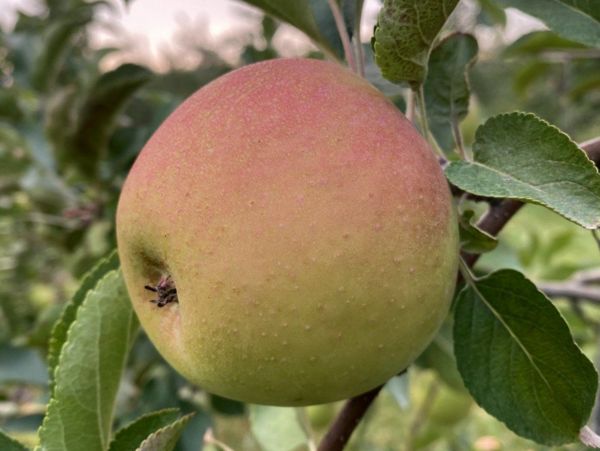
Sweet Coppin is a English cider apple that is pale yellow with a pink blush and fine russeting. It ripens mid-late season, and yields a juice that is mildly bittersweet, and traditionally used to add sweetness to blends (SG ~ 1.05; TA ~ 2 g/L; tannin 1.4 g/L). The fruit drops when ripe and should be pressed soon after harvest.
Sweet Coppin originated in Devon, England in the late 1800s.
Error
Please Confirm
The Fruit
Fruit Type
Category: Apple
Subcategory:
Heirloom, Cider
Fruit Uses & Storage
Uses: cider
Cider classification: sweet
Storage duration: less than one month (approximate, depending on storage conditions)
Fruit Appearance
Skin color: yellow
Flesh color: white
Fruit Origins
Parentage: unknown
Origin: Devon, England
Introduced in: late 1800s
Introduced by:
The Environment
Calendar & Geography
USDA zones: 5 - 7
Chill hours: Not yet determined
Ripening date: Oct 20 (approximate, in New York State) + 35 days after McIntosh
Tree Height & Spacing
glossary
Rootstock: G.210 Rootstock
Rootstock size class: Semi-Dwarf (40% of Standard)
Tree spacing (natural spread of tree): 12'
Good for wildlife planting? N
Diseases & Pests
glossary
Fireblight: Susceptible
Powdery Mildew: Susceptible
Pollination
Pollination Factors
glossary
Bloom group: 3
Is it self-fertile? N
Is it fertile? Y
Ploidy: Diploid
Rootstock size class:
Semi-Dwarf (40% of Standard)
Pollination Partners
This table shows the first few results from a full search for pollenizers of Sweet Coppin Apple on G.210. Please see our Pollenizer Search to run other queries and read how the application uses various factors. Also read more about fruit tree pollination.
See all pollination matches for Sweet Coppin Apple on G.210
Featured Products
A few things we're loving right now...
GoldRush Apple on G.890

Harrow Crisp Pear on OHxF 87
A modern, self-fertile, fireblight-resistant pear from Canada.

Sweetheart™ Cherry on Mahaleb
This is an easy, self-fertile sweet cherry.

Winecrisp™ Apple on B.118
A beautiful purple, late-season, disease-resistant dessert apple.