









A highly flavored, late-season dessert apple, perfect for organic production.
Santa Rosa Plum Scionwood (Spring 2027)
A reliable, self-fertile plum that performs very well on the West Coast.
The tree is vigorous, upright, compact, and highly productive. It is reliably prolific and performs especially well on the West Coast. This is an excellent choice for a cold-hardy, easy-to-grow plum. It is self-fertile, but it should be grown with another midseason Japanese plum for optimal fruit quality. Suitable partners include Burbank, Shiro, Satsuma, and Elephant Heart. It is an excellent pollenizer, considered by many growers to be a "universal pollenizer" for Japanese and hybrid plums. Santa Rosa is quite susceptible to bacterial spot but somewhat resistant to black knot.
Santa Rosa produces a medium-sized, round plum with a purplish-red skin that is speckled with tiny pale dots. Yellow around the pit, the juicy flesh is a luscious, deep red near the skin. The flavor is rich, aromatic, and delicious. It ripens in early August, about a month before Stanley.
Long considered the industry standard for plum flavor, Santa Rosa was bred by Luther Burbank of Santa Rosa, California and introduced in 1906. From UC Davis: "‘Santa Rosa’ was described as “‘a complex hybrid containing a mixture of Prunus triflora [salicina], P. Simonii, and P. americana, with the salicina characters predominating.’ The exact cultivars will never be known, but the red flesh would indicate that the ‘Satsuma’ played a part” (Howard, 1945). However, Boonprakob and Byrne (2003) found that ‘Santa Rosa’ did not have P. americana in its parentage, but did have P. cerasifera." This heritage makes Santa Rosa comparable to Russian hybrids such as Lavina and Obilinaya. Santa Rosa was Luther Burbank's most successful and celebrated introduction. It remains one of the most commonly cultivated plums in America, southern Europe, North Africa, South Africa, Australia, and New Zealand.
Volume Pricing
| Quantity | Santa Rosa Plum Scion |
|---|---|
| 1 | $12.00 |
| 2-5 | $8.00 |
| 6-10 | $7.00 |
| 11-99 | $6.00 |
| 100+ | $5.00 |
Error
Please Confirm
The Fruit
Fruit Type
Category: Plum
Subcategory:
Japanese, Hybrid, Self-Fertile
Fruit Uses & Storage
Uses: fresh eating, jam, baking, canning, freezing, jelly
Storage duration: less than one month (approximate, depending on storage conditions)
Fruit Appearance
Skin color: red
Flesh color: red
Fruit Origins
Parentage: unknown
Origin: Santa Rosa, California
Introduced in: 1906
Introduced by: Luther Burbank
The Environment
Calendar & Geography
USDA zones: 5 - 8
Chill hours: 700
Ripening date: Aug 02 (approximate, in New York State) 30 days before Stanley
Diseases & Pests
glossary
Bacterial Spot: Very Susceptible
Black Knot: Resistant
Pollination
Pollination Factors
glossary
Bloom group:
Is it self-fertile? Y
Is it fertile? Y
Ploidy: Diploid
Pollination Partners
This table shows the first few results from a full search for pollenizers of Santa Rosa Plum. Please see our Pollenizer Search to run other queries and read how the application uses various factors. Also read more about fruit tree pollination.
| Tree | Currently in Stock |
|---|---|
| Bubblegum Plum | 31 |
| Vanier Plum | 29 |
| Oishi-Wase Plum | 26 |
| Early Golden Plum | 25 |
| Satsuma Plum | 23 |
| Obilinaja Plum | 21 |
| Kubanskaya Plum | 20 |
| Ozark Premier Plum | 17 |
| Lavina Plum | 17 |
| Nadia Plum | 16 |
| Shiro Plum | 15 |
See all pollination matches for Santa Rosa Plum
Featured Products
A few things we're loving right now...
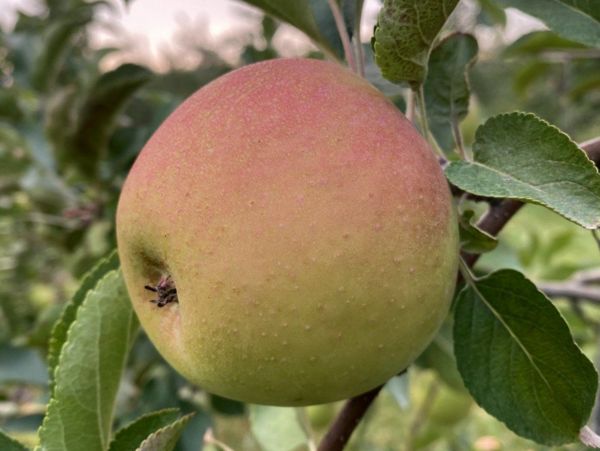
GoldRush Apple on G.890

Harrow Crisp Pear on OHxF 87
A modern, self-fertile, fireblight-resistant pear from Canada.

Sweetheart™ Cherry on Mahaleb
This is an easy, self-fertile sweet cherry.

Winecrisp™ Apple on B.118
A beautiful purple, late-season, disease-resistant dessert apple.