





A highly flavored, late-season dessert apple, perfect for organic production.
Bubblegum Plum Scionwood (Spring 2027)
An aromatic, delicious, disease-resistant plum. Also known as Toka.
Bubblegum grows on a hardy, vigorous, upright, dense tree. It is precocious but not self-fertile. It blooms early-mid-season and it will need to be partnered with another Japanese, Japanese-American hybrid, or a native plum (P. nigra or P. americana) for pollination. Good hybrid pollinators include Kaga, Waneta, South Dakota, and Superior. Bubblegum has a great reputation as a reliable pollenizer for other early-mid blooming hybrids. It is also very resistant to black knot.
The plum, ripening about 15 days before Stanley, is small-medium sized, bright red, and intensely aromatic. The yellow flesh is freestone, juicy, and very sweet, with a distinctly candy-like flavor. The perfumed sweetness of Bubblegum never fails to impress, and it has quickly become a favorite in our orchard.
The original name of Bubblegum is Toka and it originates from the prolific breeding experiments of Niels Hansen. In the 1890s, finding himself in South Dakota, Dr. Hansen made it his mission to breed plant varieties that would stand up to the challenge of this cold, dry climate. He collected breeding material from even harsher climates, such as Siberia, and he is now most known for his red-fleshed apples and the Purple-Leaf Sand Cherry, a common ornamental. Toka was the result of Hansen hybridizing Prunus americana with Prunus simonii, the Chinese apricot plum. The offspring has the delicate flavor of the apricot plum bolstered by the cold hardiness and disease resistance of the American plum.
Volume Pricing
| Quantity | Bubblegum Plum Scion |
|---|---|
| 1 | $12.00 |
| 2-5 | $8.00 |
| 6-10 | $7.00 |
| 11-99 | $6.00 |
| 100+ | $5.00 |
Error
Please Confirm
The Fruit
Fruit Type
Category: Plum
Subcategory:
Hybrid, Cold-Hardy
Fruit Uses & Storage
Uses: fresh eating, jam, baking, canning, freezing, jelly
Storage duration: less than one month (approximate, depending on storage conditions)
Fruit Appearance
Skin color: red
Flesh color: yellow
Fruit Origins
Parentage: Prunus americana x Prunus simonii
Origin: South Dakota
Introduced in: 1911
Introduced by: N.E. Hansen
The Environment
Calendar & Geography
USDA zones: 3 - 8
Chill hours: Not yet determined
Ripening date: Aug 17 (approximate, in New York State) 15 days before Stanley
Diseases & Pests
glossary
Black Knot: Resistant
Brown Rot, Blossom Blight, Fruit Rot: Susceptible
Pollination
Pollination Factors
glossary
Bloom group: 3
Is it self-fertile? N
Is it fertile? Y
Ploidy: Diploid
Pollination Partners
This table shows the first few results from a full search for pollenizers of Bubblegum Plum. Please see our Pollenizer Search to run other queries and read how the application uses various factors. Also read more about fruit tree pollination.
| Tree | Currently in Stock |
|---|---|
| Rosy Gage™ Plum | 97 |
| Santa Rosa Plum | 34 |
| Empress Plum | 33 |
| Imperial Epineuse Plum | 32 |
| Vanier Plum | 29 |
| Damson Plum | 28 |
| Victoria Plum | 27 |
| Oishi-Wase Plum | 26 |
| Early Golden Plum | 25 |
| Satsuma Plum | 23 |
| Reine Claude Conducta Plum | 22 |
See all pollination matches for Bubblegum Plum
Featured Products
A few things we're loving right now...
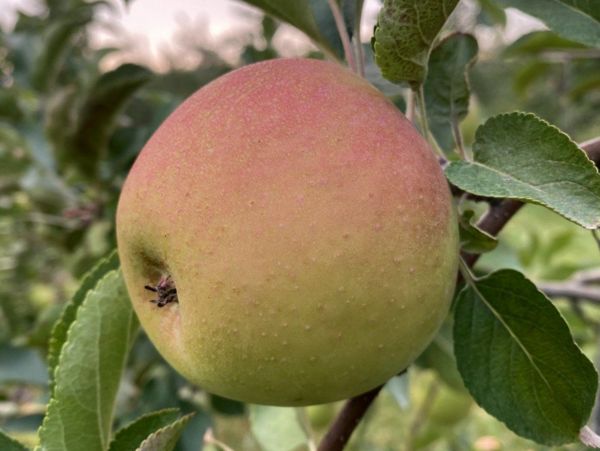
GoldRush Apple on G.890

Harrow Crisp Pear on OHxF 87
A modern, self-fertile, fireblight-resistant pear from Canada.

Sweetheart™ Cherry on Mahaleb
This is an easy, self-fertile sweet cherry.

Winecrisp™ Apple on B.118
A beautiful purple, late-season, disease-resistant dessert apple.