




A highly flavored, late-season dessert apple, perfect for organic production.
Macoun Apple Scionwood (Spring 2027)
The Northeast cult favorite, a child of McIntosh.
A hardy and vigorous but small tree, Macoun will need aggressive thinning to maintain fruit quality and annual bearing. It is resistant to cedar-apple rust, susceptible to fireblight, and very susceptible to scab and canker. Best fruit quality is attained in the Northeast.
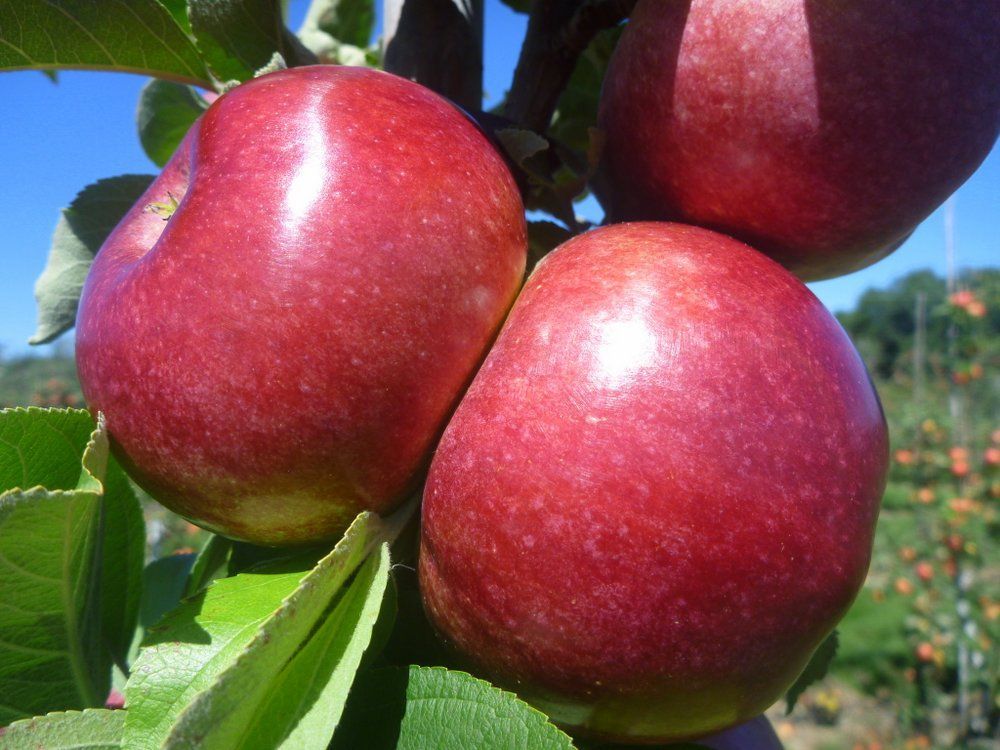
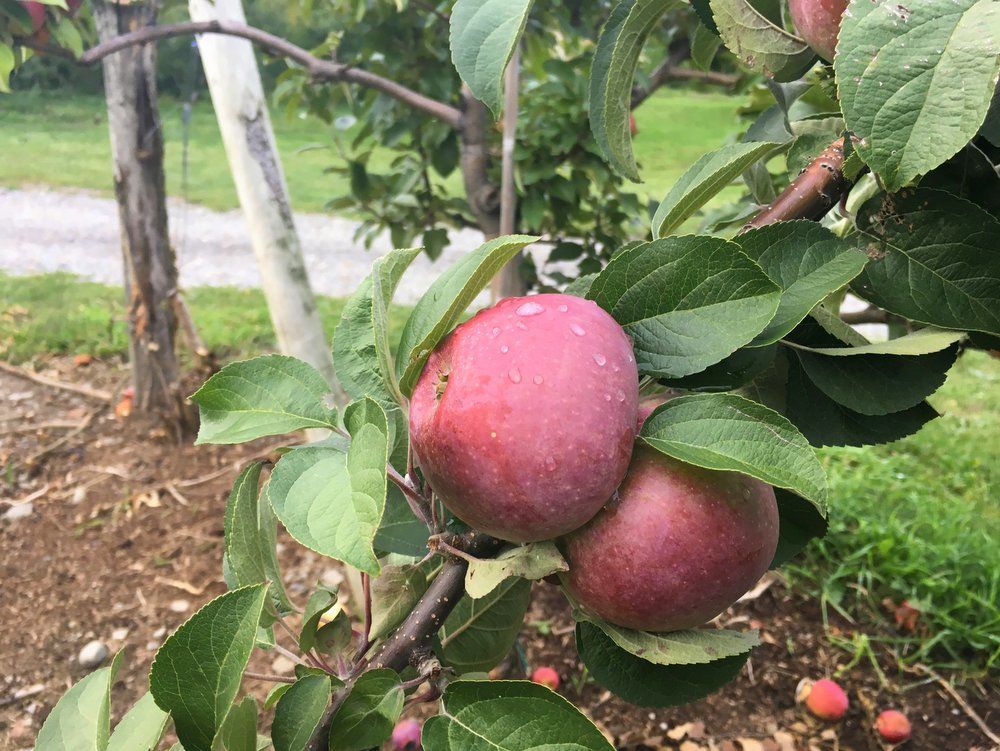
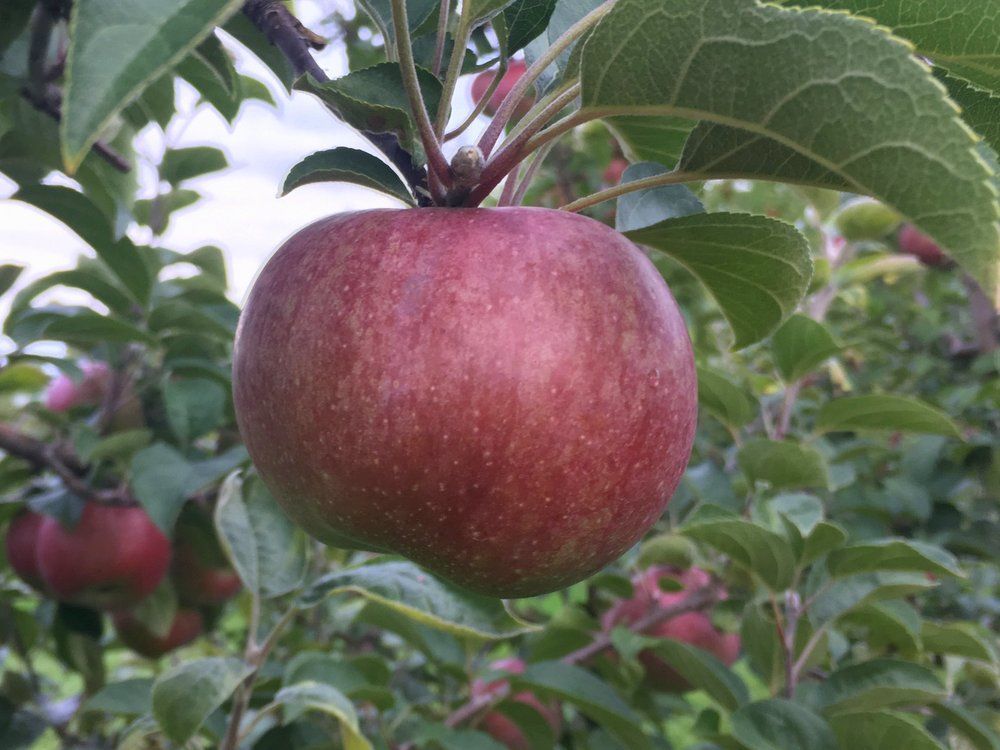
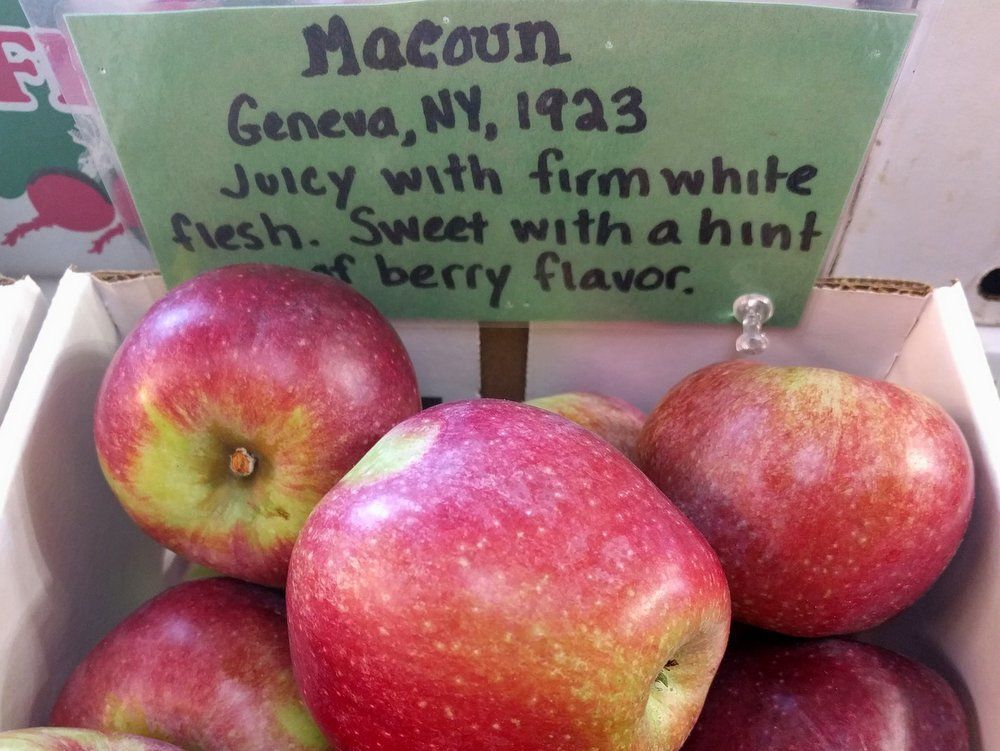
This heirloom apple is the same shape and size as McIntosh, but with a more striped and deeper red coloring; the skin is a dark purplish red blushed over a green background. The flesh is greenish white and crisp yet melting. This is an aromatic, high-quality eating apple. Sweet-tart with a hints of spice and flowers, Macoun is a cult favorite in the Northeast, but the fruit drops readily, bruises easily, and stores poorly. As Jacobsen puts it in Apples of Uncommon Character, "Because you can't take it with you–Macoun neither ships nor stores–it functions like a seasonal madeleine in the memory of many a New Englander."
Macoun is a cross of McIntosh and Jersey Black that was developed by New York Agricultural Experimental Station in Geneva, NY in 1909 and first released to the public in 1923. It was named after William Macoun, the famous Canadian fruit breeder and Dominion horticulturalist at the Central Experimental Farm near Ottawa, Canada. This man was largely responsible for the success of McIntosh.
Volume Pricing
| Quantity | Macoun Apple Scion |
|---|---|
| 1 | $12.00 |
| 2-5 | $8.00 |
| 6-10 | $7.00 |
| 11-99 | $6.00 |
| 100+ | $5.00 |
Error
Please Confirm
The Fruit
Fruit Type
Category: Apple
Subcategory:
Cold-Hardy, Dessert
Fruit Uses & Storage
Uses: fresh eating
Storage duration: less than one month (approximate, depending on storage conditions)
Fruit Appearance
Skin color: red
Flesh color: white
Fruit Origins
Parentage: McIntosh x Jersey Black
Origin: Geneva, NY
Introduced in: 1923
Introduced by: Richard Wellington, NYSAES
The Environment
Calendar & Geography
USDA zones: 3 - 7
Chill hours: 800
Ripening date: Oct 06 (approximate, in New York State) + 21 days after McIntosh
Diseases & Pests
glossary
Apple Scab: Very Susceptible
Cedar-Apple Rust: Resistant
Fireblight: Susceptible
Perennial Canker: Very Susceptible
Pollination
Pollination Factors
glossary
Bloom group: 3
Is it self-fertile? N
Is it fertile? Y
Ploidy: Diploid
Pollination Partners
This table shows the first few results from a full search for pollenizers of Macoun Apple. Please see our Pollenizer Search to run other queries and read how the application uses various factors. Also read more about fruit tree pollination.
| Tree | Currently in Stock |
|---|---|
| Honeycrisp Apple | 0 |
| Golden Russet Apple | 0 |
| GoldRush Apple | 0 |
| Spartan Apple | 0 |
| Co-op 39 CC Apple | 0 |
| McIntosh Apple | 0 |
| Sansa Apple | 0 |
| Sweet Sixteen Apple | 0 |
| Co-op 33 PC Apple | 0 |
| Liberty Apple | 0 |
| Porter's Perfection Apple | 0 |
See all pollination matches for Macoun Apple
Featured Products
A few things we're loving right now...
GoldRush Apple on G.890

Harrow Crisp Pear on OHxF 87
A modern, self-fertile, fireblight-resistant pear from Canada.

Sweetheart™ Cherry on Mahaleb
This is an easy, self-fertile sweet cherry.

Winecrisp™ Apple on B.118
A beautiful purple, late-season, disease-resistant dessert apple.