

A highly flavored, late-season dessert apple, perfect for organic production.
King David Apple Scionwood (Spring 2027)
A highly-flavored, late-season dessert apple.
This tree is about as easy as it gets. Large, bushy, and spreading, it is precocious, productive, and resistant to most major apple diseases (although fireblight can be a problem in zones 5 and higher). It will do well in a ridiculously wide range of climates. Our only recommendation is that the tree be well thinned to maintain annual bearing. Juvenile trees may suffer from bitter pit.
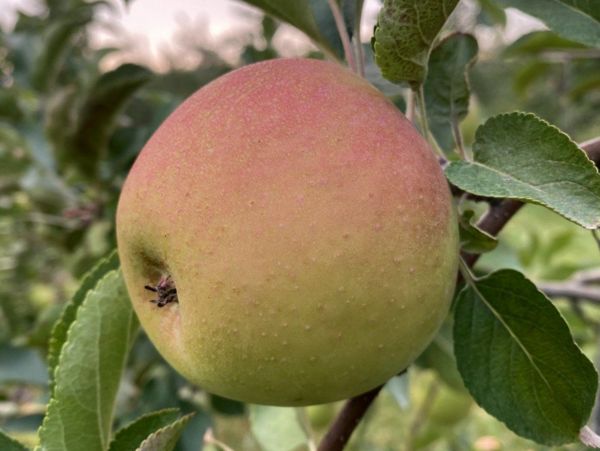
King David is a medium-sized, late-season apple with a pale green skin that is overlaid with a deep dark wine-red. For best flavor, fruit should be harvested as soon as it is fully colored, but if left on the tree the apples will hang into the winter and the color will continue to deepen until it is almost black. The flesh is yellowish; its intensely tart flavor explodes with spice, citrus, and tropical notes that are deepened by caramelized sugars. The intensity can be a bit of a shock. It will store well for about two months, and will make an amazing pie, sauce, or cider.
Discovered on a fencerow on the Arkansas farm of Ben Frost in 1893, King David is thought to be a cross of Jonathan and either Arkansas Black or Winesap. It was introduced to the commercial market by Stark Bros. in 1902.
Volume Pricing
| Quantity | King David Apple Scion |
|---|---|
| 1 | $12.00 |
| 2-5 | $8.00 |
| 6-10 | $7.00 |
| 11-99 | $6.00 |
| 100+ | $5.00 |
Error
Please Confirm
The Fruit
Fruit Type
Category: Apple
Subcategory:
Heirloom, Disease-Resistant, Cold-Hardy, Hot-Climate, Dessert, Wildlife Planting
Fruit Uses & Storage
Uses: fresh eating, cider, baking, canning, sauce
Storage duration: one to three months (approximate, depending on storage conditions)
Fruit Appearance
Skin color: purple
Flesh color: yellow
Fruit Origins
Parentage: Jonathan x Arkansas Black/Winesap
Origin: Arkansas
Introduced in: 1902
Introduced by: Stark Bros. Nursery
The Environment
Calendar & Geography
USDA zones: 4 - 8
Chill hours: Not yet determined
Ripening date: Nov 03 (approximate, in New York State) + 49 days after McIntosh
Diseases & Pests
glossary
Apple Scab: Resistant
Cedar-Apple Rust: Resistant
Fireblight: Susceptible
Pollination
Pollination Factors
glossary
Bloom group: 3
Is it self-fertile? N
Is it fertile? Y
Ploidy: Diploid
Pollination Partners
This table shows the first few results from a full search for pollenizers of King David Apple. Please see our Pollenizer Search to run other queries and read how the application uses various factors. Also read more about fruit tree pollination.
| Tree | Currently in Stock |
|---|---|
| Honeycrisp Apple | 861 |
| Golden Russet Apple | 552 |
| Macoun Apple | 287 |
| Spartan Apple | 198 |
| GoldRush Apple | 196 |
| Co-op 39 CC Apple | 191 |
| McIntosh Apple | 181 |
| Co-op 33 PC Apple | 176 |
| Sansa Apple | 173 |
| Porter's Perfection Apple | 160 |
| Granny Smith Apple | 144 |
See all pollination matches for King David Apple
Featured Products
A few things we're loving right now...
GoldRush Apple on G.890

Harrow Crisp Pear on OHxF 87
A modern, self-fertile, fireblight-resistant pear from Canada.

Sweetheart™ Cherry on Mahaleb
This is an easy, self-fertile sweet cherry.

Winecrisp™ Apple on B.118
A beautiful purple, late-season, disease-resistant dessert apple.